
What is the short answer?
Winter moisture may involve an ice dam, a problem around roof flashing or another opening, or condensation that looks like a leak. A ceiling stain identifies a symptom, not necessarily its origin. Record when the moisture appears and arrange an evaluation so the recommendation addresses the cause rather than only the visible mark.
What are the key takeaways?
- Record whether moisture follows snowfall, melting, or rain.
- Describe active wetness separately from an older stain.
- Ask what findings support the diagnosis.
- Confirm what remains unassessed because of snow or access.
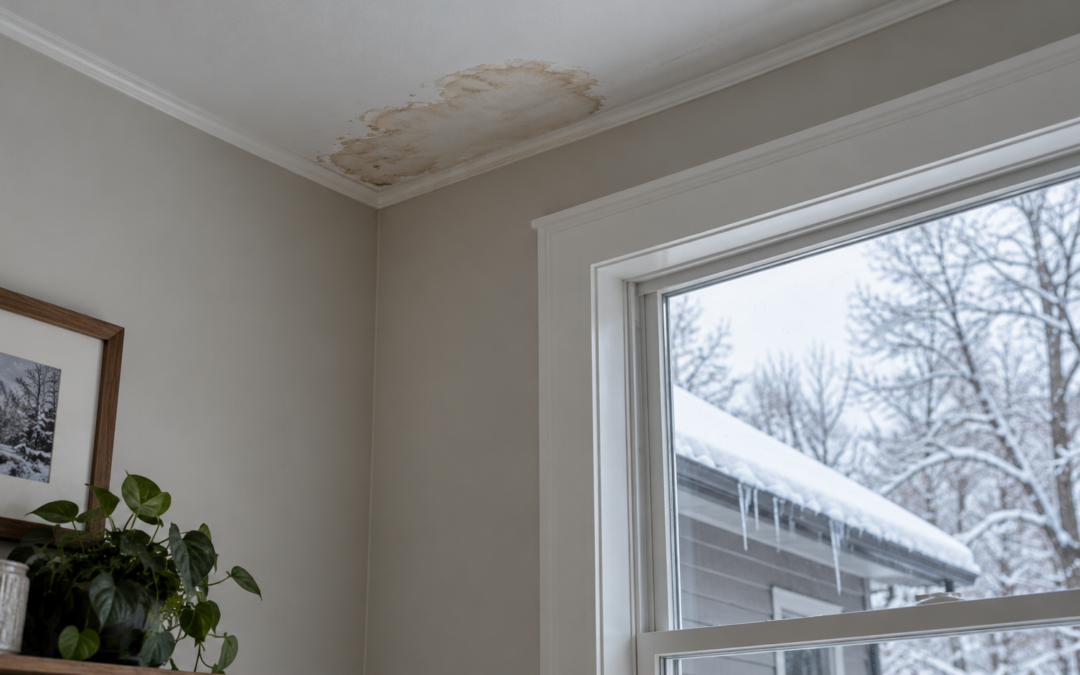
Featured image: AI-generated editorial illustration, not a photograph of a Big Fish project.
Big Fish Roofing uses GAF roofing products and is a GAF Master Elite® Contractor.
Last revised: October 15, 2026
Sources: University of Minnesota Extension • Big Fish’s roof and exterior consultation • Department of Energy guidance

What does the timing of winter moisture tell you?
A roof may appear dry through several rainstorms, then a stain shows up after snow. That timing is worth reporting, but it does not settle the diagnosis.
Write down whether the first sign appeared while snow was falling, when temperatures rose, or during rain on existing snow. Note whether the same location has been affected before.
You do not need a weather journal. A few accurate observations can help make the appointment more useful than trying to identify a failed component yourself.
Could an ice dam be involved?
University of Minnesota Extension explains that water can collect behind ice at the roof edge and find its way into the home. If indoor moisture appears while an ice buildup is present, tell the evaluator about both observations.
That relationship is a clue to investigate, not proof from a photograph. Ask whether the findings support an ice-dam explanation or suggest another cause.
Do not attempt to reach the roof edge or break the ice to test your theory.
What about chimneys, vents, and other roof openings?
A chimney, skylight, or other roof opening can be part of a leak assessment. Big Fish’s roof and exterior consultation can help identify visible exterior concerns and determine what further investigation is needed.
Tell the contractor if the moisture is near one of those features. Ask whether the relevant roof details were visible and what was found.
Avoid assuming that the nearest feature is the source. Let the investigation establish the relationship between the roof condition and the interior symptom.
Can condensation look like a leak?
Yes, an attic moisture issue can be mistaken for exterior water entry. Department of Energy guidance notes that air sealing between the home and attic helps prevent attic moisture problems.
Ask whether the evaluation considered moisture from inside the home as well as water from outside. If roof conditions do not explain the symptom, further assessment may be needed.
That distinction matters because the next step should match the cause. A recommendation to change roofing materials should explain what that work would address.
What should you do when you notice a stain or drip?
Report new or active moisture promptly. Photograph the area only if it is safe, describe the location, and record when the change appeared.
Keep away from a ceiling that looks unstable and from water near electrical equipment. Seek appropriate emergency help for an immediate hazard. Do not enter an unsafe attic or climb onto an icy roof.
When you contact the contractor, explain whether the area is currently wet or whether you are seeing an older mark. That gives the team clearer information about what is happening now.
What information should you share with Big Fish?
Describe the room and the approximate location of the moisture. Explain whether it is a first occurrence or a recurring issue. Mention recent roofing, siding, gutter, or attic work.
Share exterior photographs taken from safe ground if you have them. Include the timing of snowfall, melting, or rain as best you remember.
If someone previously repaired the area, provide the scope or invoice. Ask whether the current concern is the same issue or needs a fresh assessment.
What questions should you ask about a proposed repair?
- What findings explain the moisture?
- Which component needs attention?
- What does the work cover?
- What remains uncertain because of snow, ice, or limited access?
If an immediate measure is recommended, ask about its limits and any permanent work that may follow. If more investigation is needed, ask what that investigation is intended to establish.
A useful explanation should leave you understanding why the proposed action fits the evidence. It should not rest on the stain’s appearance alone.
If moisture returns, review the roofing services available and ask what evidence supports the diagnosis and whether follow-up is needed after the snow clears.
How can you prepare before the next winter?
Keep photographs, evaluation notes, and records of completed work together. Ask whether a follow-up check is appropriate and what changes you should report sooner.
For Pittsburgh and nearby Western Pennsylvania homeowners, a recurring winter symptom deserves an explanation that considers the home’s relevant exterior and attic conditions.
Do not rely on the symptom disappearing in warmer weather as confirmation that the cause has been corrected.
How can Big Fish help investigate a winter leak?
If something changes during snowfall or melting, start with the symptom and its timing. Ask about a roof and exterior consultation when more than one exterior area may be involved.
Prepare a brief description of where the moisture appears, whether it is active, and how it relates to snowfall, melting, or rain.
What might explain moisture that appears during winter?
|
Possible cause |
Useful observation |
What needs assessment |
|---|---|---|
|
Ice-related water backup |
Moisture appears while roof-edge ice is present |
Whether the findings support an ice-dam explanation. |
|
Roof opening or flashing concern |
Moisture near a chimney, skylight, or vent |
The actual water path and condition of details. |
|
Attic moisture or condensation |
Dampness without an established exterior entry point |
Relevant indoor moisture and attic conditions. |
|
Uncertain source |
Symptoms recur despite earlier work |
The cause and limits of prior repairs. |
What should you ask about roofing warranties?
Ask which warranty is included in your written proposal and what its eligibility, registration, exclusions, and transfer terms require. Compare Big Fish’s warranty information with GAF’s current warranty terms; coverage depends on the qualifying products and installed system.
What else do homeowners ask?
Does a winter leak mean the roof needs replacement?
The symptom does not establish the project scope. Ask for a diagnosis and an explanation of the options.
Should I repaint the stain once it dries?
First establish why the moisture appeared and whether that cause has been addressed.
Can snow prevent a complete evaluation?
Ask what could and could not be checked under the current conditions and whether follow-up is needed.
What details help an evaluator investigate a winter-only leak?
Record where moisture appears and whether it follows rain, a thaw, snowmelt, or a cold period. Safely taken photos and previous repair records help explain the pattern, but they do not replace an assessment of the roof and attic.
Can thawing attic frost look like a roof leak?
Yes. Frost on cold attic surfaces can melt and drip as temperatures rise. The moisture source still needs investigation, because the same visible stain can result from different conditions.
Which resources can help with the next step?
What is the next step?
Winter moisture may involve exterior water entry, trapped meltwater, or attic condensation. The timing helps an evaluator, but it cannot identify the cause by itself.
Request a no-cost, no-obligation consultation with Big Fish Roofing. Share your observations and ask what an evaluation can confirm for your home.