
Short Answer
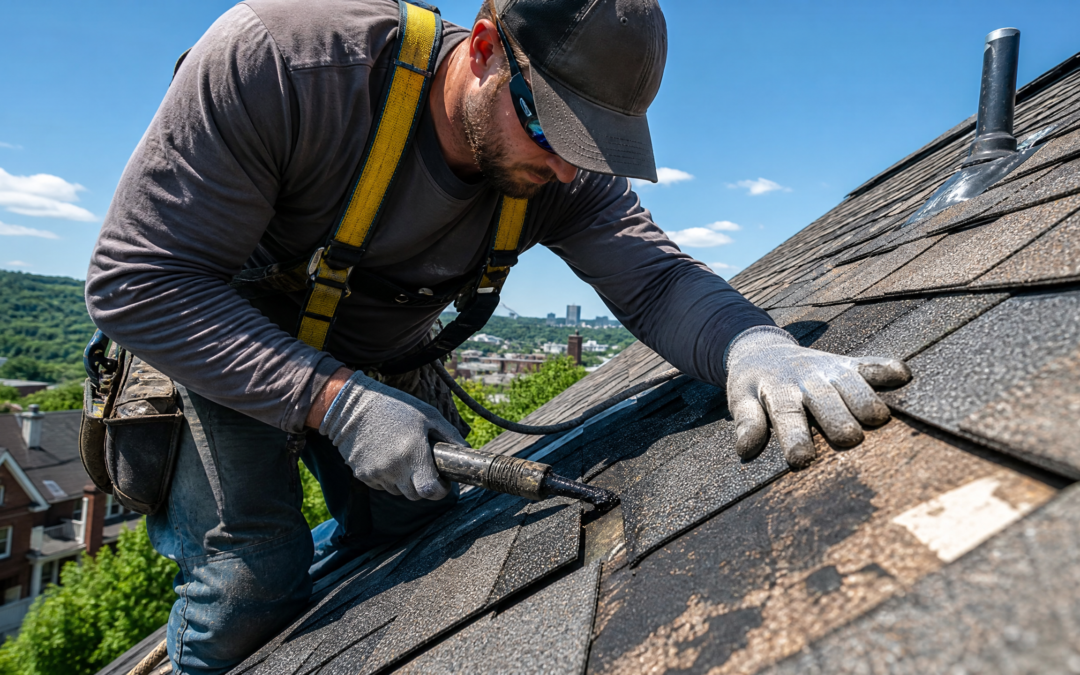
A professional roof-repair visit should identify the likely water-entry point, inspect nearby flashing and materials, determine whether the issue is isolated or widespread, and provide a written scope that explains what will be done. The contractor should also clarify what the repair can and cannot solve, how concealed damage will be handled, and the expected next steps. For a roof-specific opinion, Big Fish Roofing can provide a no-cost, no-obligation consultation to review condition and options.
Short answer: A professional roof-repair visit should identify the likely water-entry point, examine nearby flashing and materials, explain whether the problem is isolated or widespread, and provide a written scope. A responsible contractor should also clarify what the repair can and cannot solve, the expected schedule, and any warranty that applies.
What are the key takeaways?
Decision guide
| Option | When it’s appropriate | What it typically includes |
|---|---|---|
| Temporary/patch repair | Short-term fix for an obvious, isolated leak (storm debris or single failed seal) when immediate protection is needed before a full assessment. | Targeted sealing or shingle patching, basic flashing attention, and a clear note that further diagnostic work may be required if leak source is uncertain. |
| Localized diagnostic repair | Suspected area of failure where the contractor can trace the water path and confirm surrounding materials are sound. | Detailed inspection, photos, replacement of compatible materials and flashing, written scope identifying affected areas, and documentation of any allowances or exclusions. |
| Replacement or major repair | Widespread material failure, extensive decking or flashing damage, or when multiple leak sources or system-level issues (ventilation/drainage) are found. | Comprehensive scope that covers materials, prep, ventilation and flashing work, debris removal, and a final walkthrough to review completed items and any remaining concerns. |
- Diagnosis should come before a repair recommendation.
- The written scope should identify materials and affected areas.
- Photos can help homeowners understand hidden roof conditions.
- A repair should address the water path, not only the visible stain.
How should homeowners evaluate this decision?
Compare contractors by diagnostic process, documentation, scope clarity, material compatibility, communication, and written warranty terms.
Start with the condition of the whole roof rather than one product claim, symptom, or online estimate. A useful evaluation connects visible conditions with flashing, drainage, ventilation, decking where accessible, and the homeowner’s priorities. Recommendations should be explained in plain language and documented in a written scope.
What does Big Fish Roofing’s process add?
Big Fish Roofing’s documented roofing process begins with an inspection and written estimate. If work is approved, the team coordinates scheduling, installation or repair and cleanup, and a final walkthrough. This process is relevant because it gives homeowners defined points to review the condition, proposed scope, project execution, and completed work.
What should you ask before moving forward?
- What roof conditions support this recommendation?
- What materials, accessories, preparation, and cleanup are included?
- Which items are excluded or treated as allowances?
- How will concealed damage or a change in scope be documented?
- What manufacturer instructions and written warranty terms apply?
If you would like a roof-specific opinion, Big Fish Roofing can walk you through residential roofing options and explain the tradeoffs without pressure. Homeowners dealing with an active problem can also review roof repair services.
Learn how our roof repair team documents conditions with photos and a written scope — ask about our residential and commercial roof repair and storm-related services for a clear, condition-based review.
Learn how our roof repair team documents conditions with photos and a written scope — ask about our residential and commercial roof repair and storm-related services for a clear, condition-based review.
Frequently asked questions
What should I consider first?
A professional roof-repair visit should identify the likely water-entry point, examine nearby flashing and materials, explain whether the problem is isolated or widespread, and provide a written scope. A responsible contractor should also clarify what the repair can and cannot solve, the expected schedule, and any warranty that applies.
Learn how our roof repair team documents conditions with photos and a written scope — ask about our residential and commercial roof repair and storm-related services for a clear, condition-based review.
Learn how our roof repair team documents conditions with photos and a written scope — ask about our residential and commercial roof repair and storm-related services for a clear, condition-based review.
Which factors should be compared?
Compare contractors by diagnostic process, documentation, scope clarity, material compatibility, communication, and written warranty terms.
When should I request a professional roof evaluation?
Seek prompt professional help for active leaking, lifted materials, storm damage, sagging, damaged flashing, or water near electrical fixtures.
How should I compare roofing proposals?
Compare written scopes line by line, including materials, preparation, flashing, ventilation, property protection, cleanup, exclusions, change-order terms, schedule, payment terms, and any written warranty.
What is Big Fish Roofing’s next step?
Big Fish Roofing starts with an inspection and written estimate. If work is approved, the team coordinates scheduling, the repair or installation and cleanup, and a final walkthrough so the completed scope can be reviewed.
What is the next step?
Use a condition-based inspection and a clear written scope to make the decision. For honest recommendations and a no-pressure estimate, contact Big Fish Roofing.