
What is the short answer?
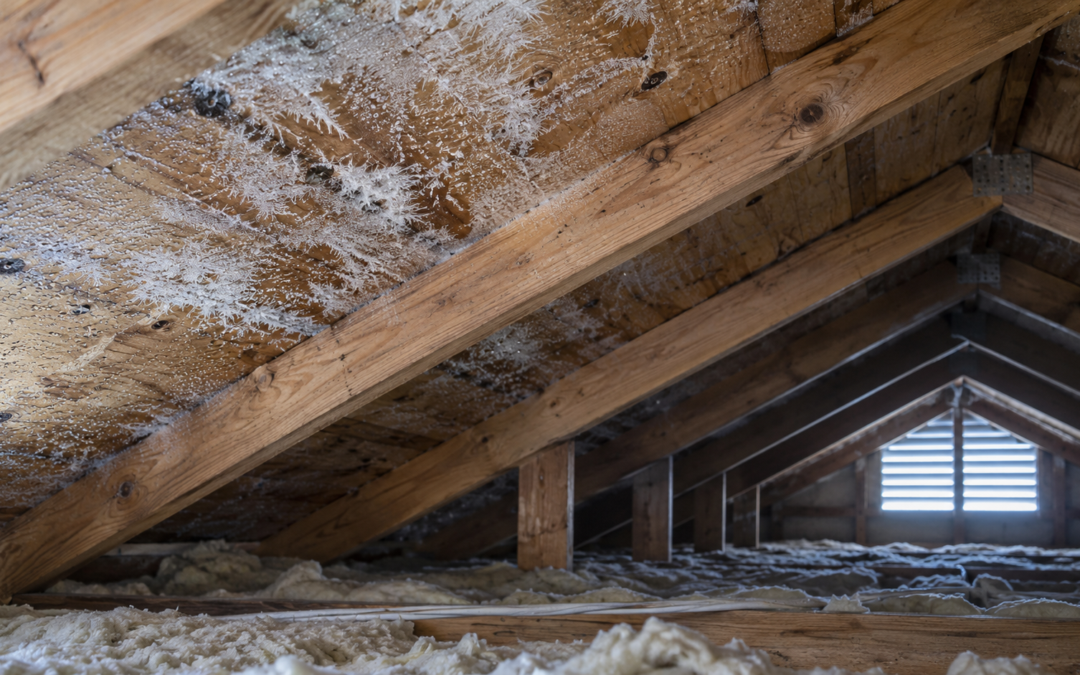
Attic frost or condensation can occur when moisture reaches cold surfaces. It does not automatically establish that the roof is leaking or that the attic simply needs more vents. The next step is to investigate the moisture source and how the attic is designed, then choose work that addresses the findings.
What are the key takeaways?
- Describe frost, dampness, and staining accurately.
- Use only safe attic access.
- Ask about both exterior water and interior moisture.
- Match ventilation or insulation work to the assessed design.
Featured image: AI-generated editorial illustration, not a photograph of a Big Fish project.
Big Fish Roofing uses GAF roofing products and is a GAF Master Elite® Contractor.
Last revised: October 15, 2026
Sources: Department of Energy guidance • ENERGY STAR

Why can attic moisture be mistaken for a roof leak?
You notice frost beneath the roof, damp wood, or a stain after temperatures rise. It is easy to assume that water must have come through the shingles.
Start by describing what you observed. Was it a widespread film, a small isolated area, or a mark near a roof opening? Was the surface wet, frosty, or already dry?
Those observations are useful to the evaluator. They are not a substitute for understanding where the moisture came from.
If you see recurring attic moisture, review Big Fish Roofing’s roofing services and ask whether a building-science or ventilation specialist should be involved in the assessment.
How can moisture from inside the house reach an attic?
Department of Energy guidance explains that air sealing between the attic and conditioned rooms helps prevent moisture problems. Openings between those spaces can be part of the assessment.
ENERGY STAR also identifies moisture signs and existing attic conditions as matters to address before an insulation project.
Ask a qualified professional about the connection between the occupied rooms and the attic. Avoid assuming that adding insulation alone will explain or resolve every symptom.
Does condensation mean the shingles failed?
The roof covering and the attic’s moisture conditions need to be considered separately. Exterior water entry may need to be investigated, but an interior moisture explanation may also be relevant.
Ask what evidence supports the diagnosis. If the contractor identifies a roofing issue, ask which component is involved. If attic conditions are implicated, ask whether another specialist should assess them.
A clear answer should distinguish observations from conclusions and explain any limitations in access.
Will adding more ventilation fix it?
The attic’s design matters. Vented and unvented roof assemblies are not interchangeable, and a generic recommendation to add vents may miss the actual issue.
Ask how the proposed change fits the existing assembly and the identified moisture source. The explanation should account for relevant air leakage, insulation, and moisture-control conditions.
Do not install a fan, open a vent, or block an opening as a trial-and-error response. Ask for a plan that fits the home.
What should you observe safely?
Only look into an attic if its access and conditions are safe. Stay on a stable surface; do not step onto insulation or unsupported areas. If safe access is unavailable, leave the inspection to a professional.
From a safe position, describe what you can see without disturbing materials. Record the location of frost, damp surfaces, staining, or visible deterioration.
Do not move insulation, disconnect exhaust ducts, or open roof materials to investigate. Tell the evaluator about any recent work that may be relevant.
What questions make the appointment more useful?
Ask whether the moisture appears to be coming from inside, outside, or a combination that needs further investigation.
Ask which attic and roof areas were checked. What could not be seen? Does the home need roofing work, an attic assessment, or coordination between trades?
If a change is recommended, ask what it is expected to accomplish and how its effectiveness will be assessed. A product name alone is not an explanation of the problem.
Why should you address recurring moisture?
If the same concern returns, keep that history and share it. A symptom that disappears during warmer weather may still need investigation before the next cold period.
Ask whether wet materials need additional attention and whether specialist help is appropriate. Do not cover up an area before understanding the cause and the recommended next steps.
Keep the evaluation notes, completed scope, and follow-up observations together. That record can make a recurring issue easier to discuss.
How can Big Fish fit into the next step?
Big Fish can discuss visible roof and exterior concerns during a consultation. Explain that the symptom is in the attic, rather than simply requesting more vents or a roof replacement.
Ask whether the available evaluation covers the relevant concern and whether additional building-science or weatherization expertise may be needed.
For homeowners in Pittsburgh and nearby Western Pennsylvania communities, the goal is a recommendation that fits the findings and the home.
What should you tell Big Fish about attic moisture?
Record when the frost or dampness appears, where it is located, and any recent exterior or attic work. Observe only where access is safe.
You do not need to arrive with a diagnosis. A useful first conversation starts with accurate observations and questions about the appropriate assessment.
How do exterior water entry and attic condensation compare?
|
Possibility |
Key distinction |
Assessment question |
|---|---|---|
|
Exterior water entry |
Water enters through an exterior path |
Which roof detail or opening explains the evidence? |
|
Interior moisture |
Moisture reaches cold attic surfaces |
What moisture pathways and attic conditions are involved? |
|
More than one contributor |
A single repair may not explain all symptoms |
Does the plan address every supported cause? |
|
Cause not established |
Appearance alone is insufficient |
What further evaluation is needed? |
What should you ask about roofing warranties?
Ask which warranty is included in your written proposal and what its eligibility, registration, exclusions, and transfer terms require. Compare Big Fish’s warranty information with GAF’s current warranty terms; coverage depends on the qualifying products and installed system.
What else do homeowners ask?
Is some attic frost automatically harmless?
Do not assume its extent or significance from one observation. Ask about recurring or widespread symptoms.
Can I add insulation over a damp area?
Ask for the moisture concern to be assessed before covering it or proceeding with an insulation project.
Does every home need the same attic ventilation?
No. Recommendations must fit the actual roof and attic design.
What observations should I record about attic frost?
Note where it appears, whether it is widespread or localized, and what happens when temperatures rise. Observe only where access is safe; do not step onto insulation or unsupported surfaces to collect more information.
Does adding ventilation always solve attic condensation?
No. Moisture sources and air leakage may also need attention, and ventilation must suit the actual roof and attic design. Ask for a coordinated recommendation rather than adding vents without understanding the cause.
Which resources can help with the next step?
What is the next step?
Recurring attic frost or condensation needs a cause-based assessment. Consider moisture sources, air leakage, insulation, and ventilation together before choosing a remedy.
Request a no-cost, no-obligation consultation with Big Fish Roofing. Share your observations and ask what an evaluation can confirm for your home.