
Short Answer
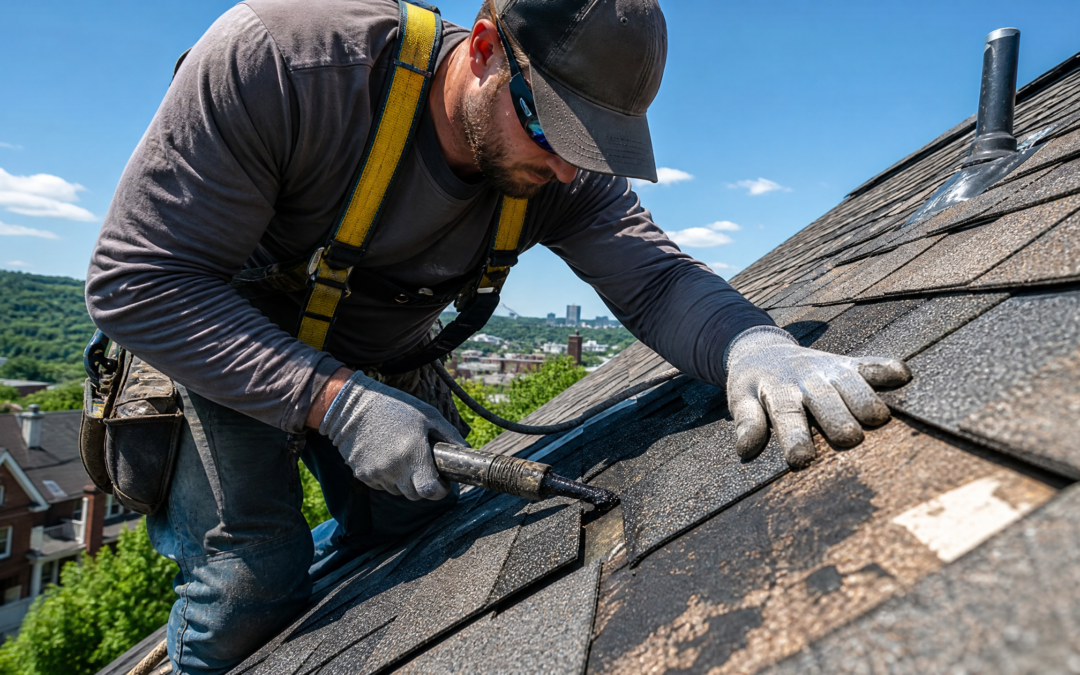
A roof leak should be addressed promptly because water can travel before it becomes visible indoors. The visible stain or drip is not always the entry point, so a professional assessment should trace the condition around roof penetrations, flashings, valleys, and drainage paths before a repair is selected.
Key Takeaways
- The visible indoor symptom may be downhill from the actual entry point.
- Avoid walking on a wet or damaged roof to investigate a leak.
- Photos, timing, and weather conditions can help document the pattern.
- A repair should address the source of water entry, not only interior symptoms.
Short Answer
If your roof is roof leaking only rains hard, the most likely causes are overwhelmed gutters, hidden seam or flashing failures, or age-related shingle problems that only let water in under heavy flow. First, protect people and valuables, place buckets under drips, and do not climb onto a wet or damaged roof. For urgent help in Greater Pittsburgh or Western Pennsylvania call 724-954-3827.
Key Takeaways
- Heavy rain can reveal problems that light rain won’t: gutter clogs, failing flashing, or saturated underlayment.
- Take immediate, safe damage-control steps (buckets, move belongings, tarps inside) and avoid roof work in wet conditions.
- A professional inspection checks flashing, valleys, roof penetrations, gutters, and attic signs of leaks.
- If you see active water running, sagging ceilings, or heavy attic soaking, call for urgent help: 724-954-3827.
Quick answer — roof leaking only rains hard
When a roof leaks only during hard rain, the issue is usually tied to water volume or wind-driven rain exposing weak spots. Small defects like cracked flashing, open seams, clogged gutters, or a failing underlayment can stay dormant during light showers but allow water in during intense storms. In Greater Pittsburgh and Western Pennsylvania, heavy seasonal storms and older housing stock make this a common homeowner concern.
What homeowners should look for
Immediate safety and damage control (first steps):
- Do not climb onto a wet or damaged roof. Falls are common and dangerous.
- Place buckets or pans under active drips and move furniture and electronics out of the path.
- If ceilings bulge or sag, evacuate the room and call for urgent help: a sagging ceiling can fail quickly.
- Document leaks with photos (for repairs or insurance) but avoid going into unsafe spaces.
Visible signs to check from the ground or attic:
- Interior stains or fresh water marks on ceilings and walls.
- Water trails or concentrated wet spots in the attic near roof seams, chimneys, or vents.
- Missing, broken, or lifted shingles seen from a safe vantage point.
- Gutters full of debris or overflowing during heavy rain.
- Deteriorated flashing around chimneys, skylights, and vent stacks.
What a professional inspection checks
A roofing professional will look for:
- Flashing integrity at chimneys, vents, and valleys.
- Condition of shingles, underlayment, and any prior repairs.
- Gutter health and downspout flow capacity.
- Attic wetting patterns to trace the leak path.
- Roof penetrations (satellite dishes, vents) and seals.
- Evidence of ice damming or poor ventilation if seasonally relevant.
What changes the answer in Western Pennsylvania
Greater Pittsburgh and Western Pennsylvania have older neighborhoods, variable seasons, and frequent heavy summer storms. That means:
- Older roofs may have failing underlayment or multiple past repairs that only fail under heavy flow.
- Wind-driven rain can push water under shingles at certain roof angles.
- Clogged gutters are common with mature trees: overflow can run behind siding or under roof edges.
Local weather and housing stock make timely inspections important: a small hidden issue here can lead to attic mold or structural damage over time if left unchecked.
Options, tradeoffs, and common mistakes
Common homeowner options:
- Temporary interior fixes (buckets, tarps, moving possessions): quick, low cost, but not a solution.
- Local repair (flashing reseal, shingle replacement): cost-effective when the problem is localized.
- Partial or full roof replacement — higher cost but appropriate for widespread aging or repeated leaks.
Tradeoffs to consider:
- Repair now vs replace later: repeated repairs add up and may still leave you vulnerable in storms.
- DIY vs pro: DIY patching can miss the true leak path; professionals use attic investigations and water tests.
Common mistakes:
- Waiting until the next rain to evaluate: delays can increase interior damage.
- Climbing onto the roof in wet weather: don’t do it.
- Focusing only on the leak spot on the ceiling instead of tracing back to the source.
Comparison: Causes, Signs, and Urgency
| Cause | Common Signs | Urgency |
|---|---|---|
| Clogged gutters/overflow | Water running past eaves during heavy rain | Medium—fix soon to prevent repeated infiltration |
| Failed flashing (chimney, valley) | Water near penetrations, attic wetting patterns | High—can allow quick interior damage |
| Damaged or missing shingles | Visible gaps, granule loss, wet attic after storms | Medium to High depending on area affected |
| Saturated underlayment/age | Leaks only under high water volume | High—likely widespread wear |
| Ice damming (seasonal) | Roof edge leaks in freeze-thaw months | Seasonal urgency—address before winter |
Mid-article note
If you have active leaks or a sagging ceiling, call right away for urgent assistance: 724-954-3827. We provide honest recommendations and no-pressure estimates for homeowners across Greater Pittsburgh and Western Pennsylvania.
When to call a roofing professional
Call a pro immediately if any of the following apply:
- Water is actively pouring through the ceiling or walls.
- A ceiling is bulging or sagging.
- You notice extensive attic wetting or mold growth.
- Multiple roofs/components show age-related failure.
Schedule a professional inspection when you have recurring leaks, visible roof damage after storms, or if your roof is older than 15–20 years depending on materials. A licensed contractor can perform a safe rooftop assessment (from ladders and with proper safety gear), an attic inspection, and targeted water testing to find the source.
Frequently Asked Questions
Can a roof leak stop on its own?
The answer depends on the condition of the roofing system, the details at vulnerable areas, and the property’s goals. A documented assessment is the most reliable way to turn a general question about why is my roof leaking only when it rains hard into a practical next step.
Why is the source of a roof leak hard to find?
Start with a clear written scope that describes the observed condition, recommended work, materials or components involved, exclusions, and how any concealed conditions will be handled.
What should I do while waiting for roof repair?
Avoid relying on a single visible symptom or a price alone. Comparing condition notes and written scopes helps clarify which approach is appropriate for the property.
When does a roof leak require urgent attention?
Contact a qualified roofing professional when there is active water entry, a safety concern, recent weather damage, or uncertainty about how the roof system is performing.
Talk With Big Fish Roofing
Big Fish Roofing serves Greater Pittsburgh and Western Pennsylvania with clear, customer-first guidance. Book a Free Drone Inspection or ask for a no-pressure estimate to discuss your property.