
Short Answer
A roof leak should be addressed promptly because water can travel before it becomes visible indoors. The visible stain or drip is not always the entry point, so a professional assessment should trace the condition around roof penetrations, flashings, valleys, and drainage paths before a repair is selected.
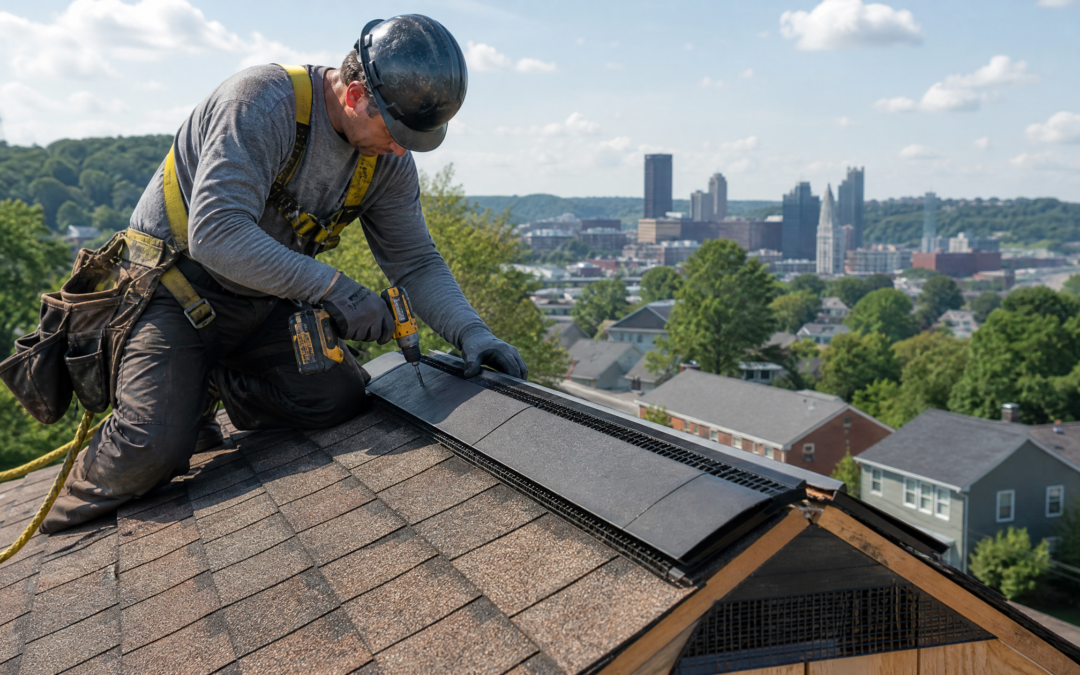
Short answer: Water near a roof vent may come from cracked or displaced flashing, a deteriorated pipe boot, loose fasteners, an installation gap, wind-driven rain, condensation, or water traveling from another roof area. The vent type, flashing detail, attic conditions, and weather pattern should be checked before choosing a repair.
What are the key takeaways?
How to Think Through the Next Step
| Situation | What It Can Mean | Practical Next Step |
|---|---|---|
| Active interior drip | Water is entering the structure now. | Protect belongings, contain water safely, and request prompt professional assessment. |
| Stain or discoloration | There may have been a previous or intermittent leak. | Document location and timing; inspect roof and attic conditions. |
| Leak after a storm | Wind-driven rain or damage may have exposed a weak point. | Document conditions and arrange a storm-related roof evaluation. |
- Diagnosis should follow the water path, not only the visible stain.
- Interior, attic, exterior, and weather evidence may all matter.
- Temporary containment is not the same as permanent repair.
- Safety comes before investigating an active leak.
How should this roof problem be evaluated?
Identify vent type, flashing or boot condition, fasteners, sealants, attic moisture, insulation, ventilation, weather direction, surrounding shingles, and uphill water paths.
Roof leaks should be evaluated as part of a connected water-management system. Surface materials, edges, valleys, flashing, penetrations, drainage, ventilation, and decking where accessible can affect the recommendation.
What should homeowners avoid?
- Do not climb onto a wet, icy, damaged, or unstable roof.
- Do not touch wet electrical equipment.
- Do not assume sealant or an interior patch is a complete repair.
- Do not rely on unsupported guarantees or insurance promises.
What Big Fish Roofing proof is relevant?
Big Fish Roofing’s documented roofing process starts with an inspection and written estimate. If work is approved, the team coordinates scheduling, repair or installation and cleanup, and a final walkthrough.
Review roof repair services or explore residential roofing options when broader work may be required.
Frequently asked questions
What should I do first?
Water near a roof vent may come from cracked or displaced flashing, a deteriorated pipe boot, loose fasteners, an installation gap, wind-driven rain, condensation, or water traveling from another roof area. The vent type, flashing detail, attic conditions, and weather pattern should be checked before choosing a repair.
For a clearer next step, explore our roof repair services and request a no-pressure estimate that explains the condition, options, and recommended scope.
For a clearer next step, explore our roof repair services and request a no-pressure estimate that explains the condition, options, and recommended scope.
What details help diagnose the problem?
Identify vent type, flashing or boot condition, fasteners, sealants, attic moisture, insulation, ventilation, weather direction, surrounding shingles, and uphill water paths.
What should a written repair scope include?
The scope should identify the affected area, diagnosis, preparation, materials, flashing or penetration work, deck assumptions, cleanup, exclusions, change-order terms, schedule, payment terms, and applicable written warranties.
When is this an urgent roofing problem?
Treat active water, sagging, storm openings, loose materials, wet electrical areas, or unsafe structural conditions as urgent. Keep people away from hazards and contact qualified help.
How does Big Fish Roofing approach roof repairs?
Big Fish Roofing begins with an inspection and written estimate. If work is approved, the team coordinates scheduling, repair or installation and cleanup, and a final walkthrough.
What is the next step?
Document the condition safely. For honest recommendations and a no-pressure estimate, contact Big Fish Roofing.
Practical Next Steps
Start with a clear assessment of the property’s condition and a written scope that explains recommended work, materials or system details, exclusions, and how concealed conditions will be documented. That approach makes it easier to compare practical options without relying on assumptions or a single price.