
What is the short answer?
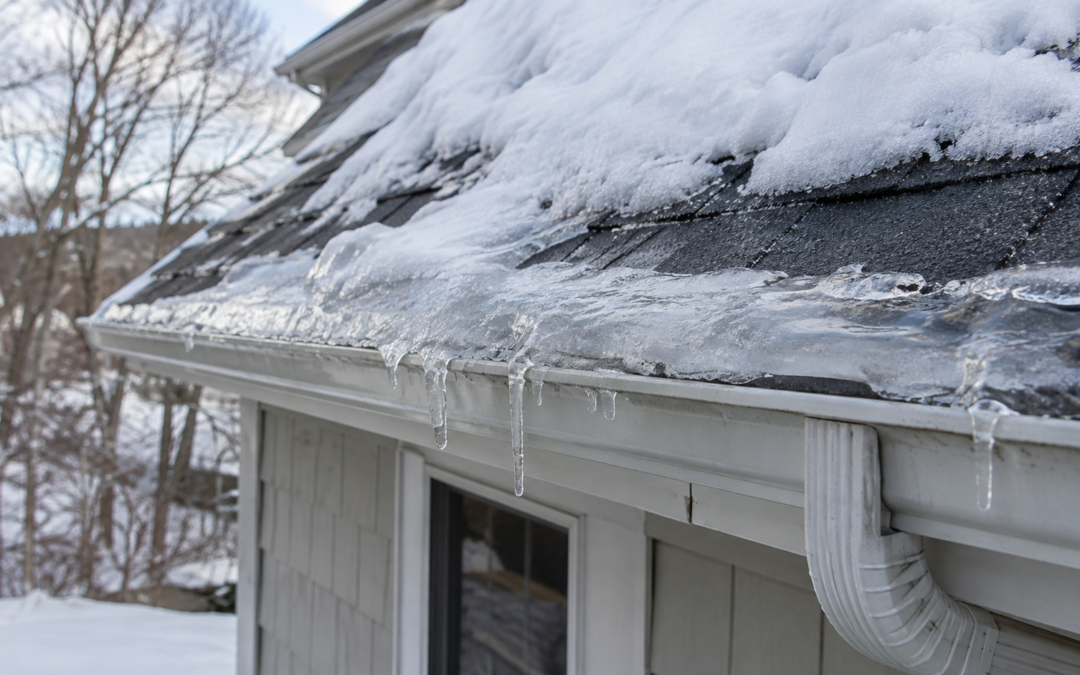
An ice dam forms when melted snow refreezes near a colder roof edge and blocks drainage. It does not automatically prove that shingles failed or the roof was installed incorrectly. Investigate the conditions behind the ice and any water entry before choosing a repair or prevention plan.
What are the key takeaways?
- An ice dam alone does not prove roof failure.
- Record where buildup occurs and whether it repeats.
- Report water entering the home promptly.
- Ask how immediate work and long-term prevention differ.
Featured image: AI-generated editorial illustration, not a photograph of a Big Fish project.
Big Fish Roofing uses GAF roofing products and is a GAF Master Elite® Contractor.
Last revised: October 15, 2026
Sources: University of Minnesota Extension

How can ice dams lead to water entry?
Water can back up behind an ice dam and reach vulnerable roof details. The ice alone does not prove that the roof was installed incorrectly. An evaluation should consider the water path, roof details, and relevant attic air sealing, insulation, and ventilation before recommending work.
Why does the same roof have melting snow and ice?
University of Minnesota Extension explains that uneven roof-surface temperatures are central to ice dams. Snow melts on a warmer area, water reaches a colder edge, and it freezes again. Water held behind that ice can find a path into the home.
Heat escaping from the house can contribute to the warmer area. That is why recurring ice deserves a conversation about the attic and the building as well as the roof covering.
Are icicles and ice dams the same thing?
Hanging icicles and an ice ridge at the eave are different observations. Record what you can see from a safe location, including where the buildup appears and whether it returns in the same area.
Do not decide the extent of a problem from an icicle’s size. A useful report describes the pattern: which side of the home, whether snow is still present, and whether water has appeared inside. Keep people away from hanging ice.
Can a newer roof have an ice-dam concern?
A roof’s recent installation date does not answer every question about the home. Ask the evaluator to distinguish the roof covering, water-shedding details, and attic conditions.
If you have a recent roofing project, keep its paperwork available. Ask what the scope included and whether the current concern relates to that work, another component, or something that has not yet been established.
An ice dam alone is not a reason to accuse an installer or dismiss a concern. Let the assessment establish what the evidence supports.
Will cleaning the gutters solve it?
Gutter maintenance and heat-loss control address different parts of the exterior system. University of Minnesota’s long-term guidance emphasizes reducing air leakage and improving insulation where appropriate.
Tell the contractor about recurring gutter overflow separately from recurring ice. Ask which symptom the proposed work is intended to address.
A useful recommendation should explain why that work fits the diagnosed problem. Avoid assuming that one product or one maintenance visit guarantees an ice-free roof.
What should you do if water appears inside?
Contact a qualified professional promptly and describe both the indoor moisture and the outside conditions. Take photos only from safe areas. Keep clear of a bulging ceiling, electrical hazards, or any area that appears unstable.
Do not walk onto a snowy roof, chop at the ice, or improvise a way to reach the eave. Winter roof work creates hazards for the person doing it and for the roofing materials.
Ask how the immediate concern will be handled and what further investigation may be needed. A short-term response and a long-term prevention plan can be separate decisions.
What information helps the evaluation?
Prepare a simple timeline.
- When did you first see the ice?
- When did the stain or drip begin?
- Did it happen after snowfall, during a thaw, or after rain?
- Has the same location caused trouble before?
Bring records of roof, gutter, siding, insulation, or other relevant work. You do not need to know which trade is responsible before asking for help.
For recurring problems, ask the evaluator whether additional building-science or weatherization expertise is appropriate. Not every contributing condition is visible during a roof visit.
What should a prevention conversation cover?
Ask what was observed, what remains uncertain, and what the proposed solution addresses. If additional assessment is recommended, understand why.
Ask whether the work targets the immediate water-entry concern, recurring heat loss, drainage, or more than one issue. Request a written explanation of the scope.
For homeowners in Pittsburgh and nearby Western Pennsylvania communities, that conversation can turn a worrying winter symptom into a clearer plan.
For recurring ice or moisture, review the roofing services available and ask whether the evaluation needs to include the attic or another qualified specialist.
How can Big Fish help with an ice-dam concern?
Big Fish can discuss visible roof and exterior concerns. Explain where the ice is forming and whether you are seeing moisture inside so the team can discuss the appropriate next step.
A useful description is: “We keep seeing ice along this roof edge, and here is what happens inside when it melts.” Include safely taken photographs and any previous work records.
How do immediate ice-dam responses differ from prevention?
|
Goal |
Focus |
Question to ask |
|---|---|---|
|
Address current water entry |
Immediate assessment and appropriate response |
What needs attention now? |
|
Understand recurring ice |
Roof and relevant attic conditions |
What is causing this pattern? |
|
Plan prevention |
Work tied to the diagnosed cause |
Does the scope address heat loss, drainage, or another condition? |
|
Confirm the outcome |
Follow-up observations |
What should we watch for next winter? |
What should you ask about roofing warranties?
Ask which warranty is included in your written proposal and what its eligibility, registration, exclusions, and transfer terms require. Compare Big Fish’s warranty information with GAF’s current warranty terms; coverage depends on the qualifying products and installed system.
What else do homeowners ask?
Does an ice dam mean I need a new roof?
The ice alone does not establish the scope of work. An evaluation should guide the recommendation.
Should I install more attic vents?
Ask for the cause to be assessed first. Ventilation is one part of a system; it is not a universal answer.
Can I wait until spring if there is water entering now?
Report current water entry promptly. Do not delay the conversation simply because winter conditions make access difficult.
Why does an ice dam return after the ice melts?
The conditions that caused uneven roof temperatures may still be present. Ask the evaluator to consider heat loss, air leakage, insulation, roof details, and the actual attic design before selecting a long-term response.
Do icicles prove there is an ice dam or a roof defect?
No. Icicles alone do not establish the full condition of the roof or explain a moisture source. Keep away from hanging ice, record recurring buildup safely, and report any indoor water entry promptly.
Which resources can help with the next step?
What is the next step?
An ice dam is a sign to investigate melting, refreezing, and any water entry. It does not establish that the roof needs replacement, and long-term prevention should address the assessed cause.
Request a no-cost, no-obligation consultation with Big Fish Roofing. Share your observations and ask what an evaluation can confirm for your home.