
Short Answer
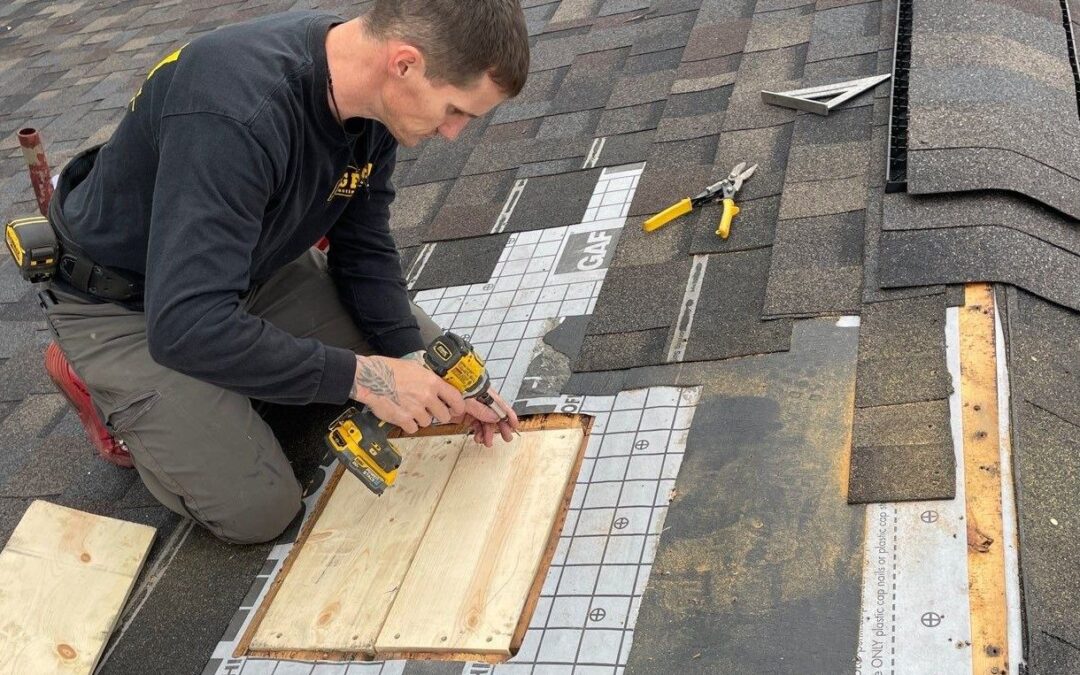
Repeated repairs can delay replacement when each problem is isolated and the surrounding roof remains serviceable. They become less practical when new leaks appear in different areas, materials are brittle or unavailable, flashing or decking problems are widespread, or cumulative repair cost no longer restores reliable performance. Big Fish Roofing can prepare a written repair‑vs‑replacement comparison to clarify tradeoffs; Book a Free Drone Inspection can get that process started.
Short answer: Repeated repairs can delay replacement when each problem is isolated and the surrounding roof remains serviceable. They become less practical when leaks recur in different areas, materials are brittle or unavailable, flashing and decking problems are widespread, or cumulative repair cost no longer restores reliable performance. A written repair-versus-replacement comparison can clarify the tradeoff.
What are the key takeaways?
Decision Guide: Repair vs Replacement
| Common situation | Signs | Recommended next step |
|---|---|---|
| Repairs still practical | Single, repeatable leak with sound surrounding material and intact flashing. | Document the issue and approve a focused repair with photos and a clear scope. |
| Replacement likely better | Leaks in multiple locations, brittle or mismatched materials, visible decking or flashing failures. | Request a roof‑wide evaluation and written replacement recommendation to compare tradeoffs. |
| Uncertain or unsafe to assess | Active water entry, sagging, or areas you cannot safely inspect from the ground. | Schedule a professional evaluation so a qualified inspector can document condition and advise options. |
- Track repair locations, dates, and outcomes.
- Recurring leaks may have different entry points.
- Material compatibility affects repair durability.
- Compare cumulative repair cost with roof-wide condition.
How should homeowners evaluate this issue?
Review leak history, number and location of repairs, remaining material condition, flashing, decking evidence, matching availability, ownership plans, and written costs.
Look at the roof as a connected water-management system. Surface materials, edges, valleys, penetrations, flashing, drainage, ventilation, and decking where accessible can affect the recommendation. A useful proposal explains how observed conditions lead to the proposed work instead of relying on a generic age, price, or product claim.
What should a written roofing scope explain?
- The condition or homeowner goal the work is intended to address
- The exact work area, preparation, materials, and accessories
- Property protection, debris handling, and cleanup responsibilities
- Exclusions, allowances, and the process for approving changes
- Schedule assumptions, payment terms, and applicable written warranties
What Big Fish Roofing proof is relevant?
Big Fish Roofing’s documented roofing process begins with an inspection and written estimate. If the homeowner approves the work, the team coordinates scheduling, installation or repair and cleanup, and a final walkthrough. Those defined steps give homeowners opportunities to review the observed condition, proposed scope, changes, and completed work.
For a roof-specific opinion, Big Fish Roofing can walk you through residential roofing options. If the concern is localized or involves active water entry, review the company’s roof repair process.
For focused fixes, review Big Fish Roofing’s roof repair process or learn about our residential roofing options to see which service fits the observed condition.
For focused fixes, review Big Fish Roofing’s roof repair process or learn about our residential roofing options to see which service fits the observed condition.
Frequently asked questions
What should I evaluate first?
Repeated repairs can delay replacement when each problem is isolated and the surrounding roof remains serviceable. They become less practical when leaks recur in different areas, materials are brittle or unavailable, flashing and decking problems are widespread, or cumulative repair cost no longer restores reliable performance. A written repair-versus-replacement comparison can clarify the tradeoff.
For focused fixes, review Big Fish Roofing’s roof repair process or learn about our residential roofing options to see which service fits the observed condition.
For focused fixes, review Big Fish Roofing’s roof repair process or learn about our residential roofing options to see which service fits the observed condition.
Which details should I compare?
Review leak history, number and location of repairs, remaining material condition, flashing, decking evidence, matching availability, ownership plans, and written costs.
What evidence should a contractor provide?
Ask for photos or other condition documentation, a written scope, exact materials and preparation, exclusions, change-order terms, schedule assumptions, cleanup responsibilities, payment terms, and applicable written warranties.
When should I request a professional roof evaluation?
Request an evaluation when you see active water, storm damage, loose materials, sagging, recurring stains, widespread wear, uncertain roof history, or a condition that cannot be assessed safely from the ground.
How does Big Fish Roofing approach the next step?
Big Fish Roofing begins with an inspection and written estimate. If work is approved, the team coordinates scheduling, installation or repair and cleanup, and a final walkthrough so the completed scope can be reviewed.
What is the next step?
Use documented conditions and a complete written scope to decide what fits the home. For honest recommendations and a no-pressure estimate, contact Big Fish Roofing.